5. Understanding Your Idea
Refine your mission and goals.
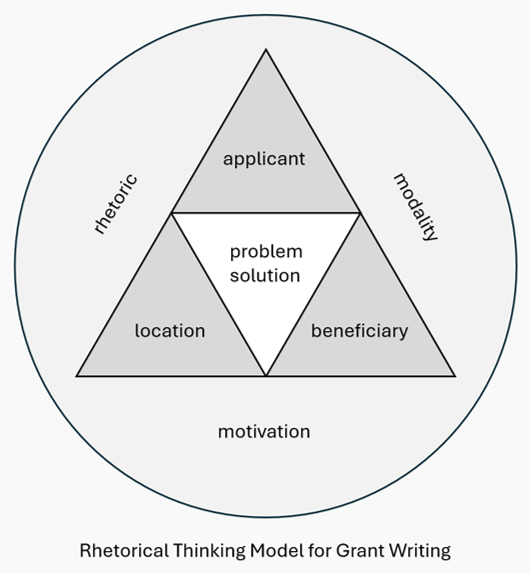
Chapter 5 focuses on transforming an initial idea into a viable, fundable project. It begins from the recognition that ideas frequently emerge as intuitions, frustrations, observations, or aspirations rather than fully developed proposals. Funders, however, support projects that demonstrate meaningful relationships among need, purpose, feasibility, and anticipated impact. The chapter presents an Idea Development Framework and introduces concept mapping, visual thinking, rhetorical summaries, value propositions, and logic models as tools for making ideas visible and testable. AI-assisted brainstorming and stakeholder feedback provide additional mechanisms for exploring and challenging assumptions before substantial proposal writing begins. The chapter also uses an architectural analogy to emphasize that effective projects require intentional structure and examines sustainability as something that should begin during idea development rather than after funding is secured. Writers are encouraged to connect ideas to needs statements and repeatedly test their assumptions using rhetorical and strategic frameworks. Ultimately, the chapter presents ideation as an iterative process in which writers clarify purpose, assess feasibility, identify value, incorporate feedback, and develop projects that can become persuasive grant proposals.
The chapter covers:
- From Inspiration to Fundable Concept
- The Idea Development Framework
- Concept Mapping and Visual Thinking
- The Rhetorical Summary
- Developing a Value Proposition
- Logic Models: See the Future Before it Happens
- Idea Validation: Testing
- Before Building
- AI Prompting for Project Discovery
- Audience Testing and Stakeholder Feedback
- The Architecture Analogy
- Sustainability Starts with an Idea
- From Idea to Needs Statement
- Chess Thinking Revisited
- Summary