1. Grant Writing and Rhetoric
Learn what makes grants unique and how to align with funder values.
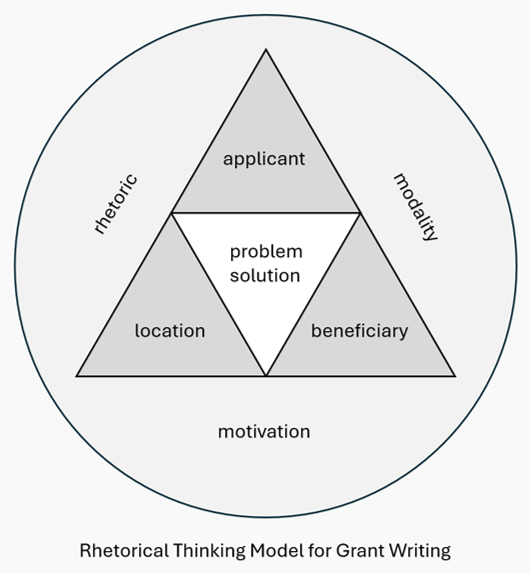
Chapter 1 establishes grant writing as a rhetorical and strategic practice rather than simply a technical exercise in completing application forms. It introduces the Rhetorical Thinking Model for Grant Writing, which asks writers to consider relationships among applicants, beneficiaries, locations, problems, solutions, motivations, and modes of communication. The chapter also introduces SWOT analysis and SMARTIE goal planning as frameworks for developing and testing grant-writing strategies. Particular attention is given to audience connection and to the strategic use of asset-based, plain-language, promotional, scientific, and storytelling styles. Because grant proposals are interpreted through particular audiences, technologies, formats, and institutional expectations, writers must consider how language and presentation influence meaning. The chapter emphasizes that technology, including artificial intelligence, can support ideation, planning, analysis, and revision but cannot replace human judgment. Effective grant writing ultimately combines rhetorical awareness, strategic planning, clear communication, sustainability, and iterative design to create persuasive proposals capable of meaningful community impact.
The chapter covers:
- The Rhetorical Thinking Model for Grant Writing
- SWOT Analyses
- SMARTIE
- Strategy and Tactics
- Rhetorical Matters
- Using Styles to Connect with the Audience
- Asset-Based Style
- Plain Language Style
- Promotional Language Style
- Scientific Style
- Storytelling Style
- More Audience Connection Strategies
- Summary